

What Is Sinigang? Why Salmon and Blueberry Work in a Modern Filipino Soup Served in Vancouver
Sinigang is the sour soup we grew up craving, it’s one of the first dishes we think of when someone asks about Filipino food. Every family seems to make it a little differently. At Haliná, ours is a tamarind and blueberry sinigang broth with coho salmon marinated in miso and ponzu. Blueberries aren’t traditional in sinigang, so think of this as our own spin on the dish. You’ll find it on our dinner menu in Vancouver.
What Makes Salmon Blueberry Sinigang Different?
Traditional sinigang is usually soured with tamarind, but Filipino cooks have used plenty of other tart fruit over the years, including unripe mango, guava, kamias and santol. Cooking with what grows nearby is part of that tradition, and BC grows a lot of blueberries, so we added them to our tamarind broth. They add a fruity sourness that works well with salmon, which is a rich, oily fish. The coho is marinated in miso and ponzu, so it also brings salt and a little citrus to the bowl.
What Goes Into Salmon Blueberry Sinigang?
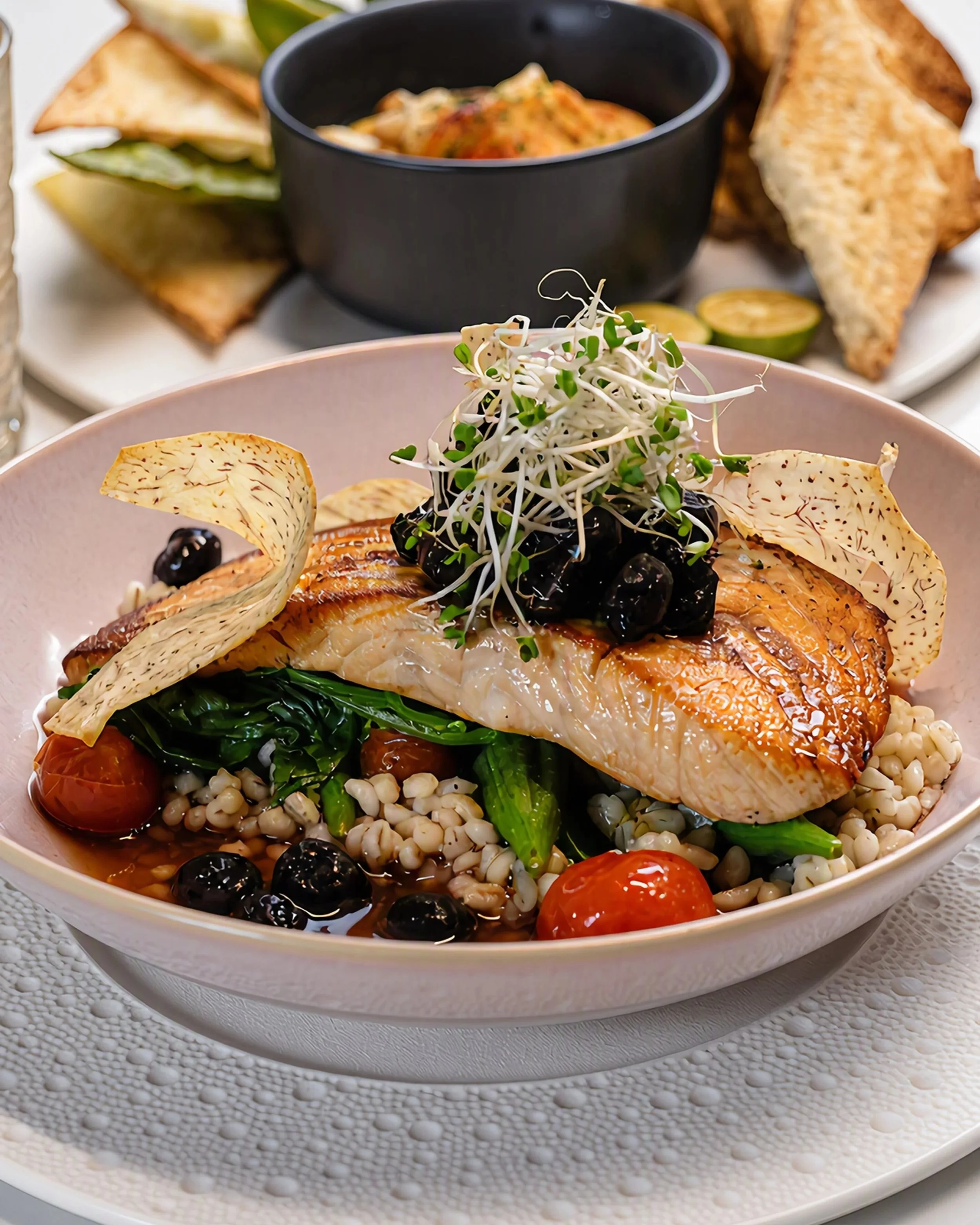
Our Salmon Berry Sinigang is coho salmon marinated in miso and ponzu, served in a tamarind and blueberry sinigang broth. The bowl also has pearl barley, okra, yu choy and tomato confit, plus crispy taro root for some crunch.
How Do Tamarind and Blueberries Work in a Sour Broth?
Blueberries might seem like an odd fit for a Filipino sour soup, but they have a fair amount of tartness under the sweetness. In the broth they add a softer, fruitier sourness on top of the tamarind, and that suits a fatty fish like coho. Some batches of blueberries are tarter, and some are sweeter, so we adjust the tamarind to keep the broth balanced. The miso and ponzu on the salmon add salt and savoury flavour, so the soup doesn’t come across as sweet.
How Does Our Version Compare to Classic Sinigang?
A lot of what’s in the bowl would look familiar to anyone who grew up eating Filipino sinigang. Okra and tomato are two of the most common vegetables in the pot. Taro, called gabi in the Philippines, is often simmered into the soup to thicken the broth, and we serve ours crispy. We use yu choy where many cooks would add kangkong, the water spinach that usually goes in near the end. The pearl barley is new, and it makes the soup filling enough to order as a main.
Where Can You Get Salmon Berry Sinigang in Vancouver?
You can order our Salmon Berry Sinigang at Haliná, 2439 East Hastings Street in East Vancouver. It’s on the dinner menu under Hapunan, our entrees, and you can book a table online before you come in. If you’re driving, there’s a free community lot with two-hour parking at Kamloops Street and Franklin Street.
Questions Often Asked
-
Sinigang is known for its sourness, which most often comes from tamarind. That sour broth is balanced by the savoury flavour of the meat or seafood, and families make it with pork, shrimp, beef or fish. Because it’s so flexible, a version with salmon and blueberries still counts as sinigang.
-
Yes, salmon sinigang is a fairly healthy meal. Salmon gives you protein and omega-3 fats, and our bowl also has okra, yu choy, tomato and pearl barley, which adds fibre.
-
The word sinigang comes from the Tagalog verb sigang, which means “to stew,” so the name roughly translates to a stewed dish. Today it refers to a sour soup more than one set recipe, and the sourness can come from tamarind, guava, kamias or other fruit.
-
We’d name sinigang na baboy, sinigang na hipon, sinigang na salmon, tinola, and bulalo as our top five. Sinigang na baboy is made with pork and sinigang na hipon with shrimp. Tinola is a chicken soup with ginger, and bulalo is a beef shank and bone marrow broth. We also serve bulalo, which is listed under Salo-Salo on our dinner menu and sized for sharing.