

Feast Box
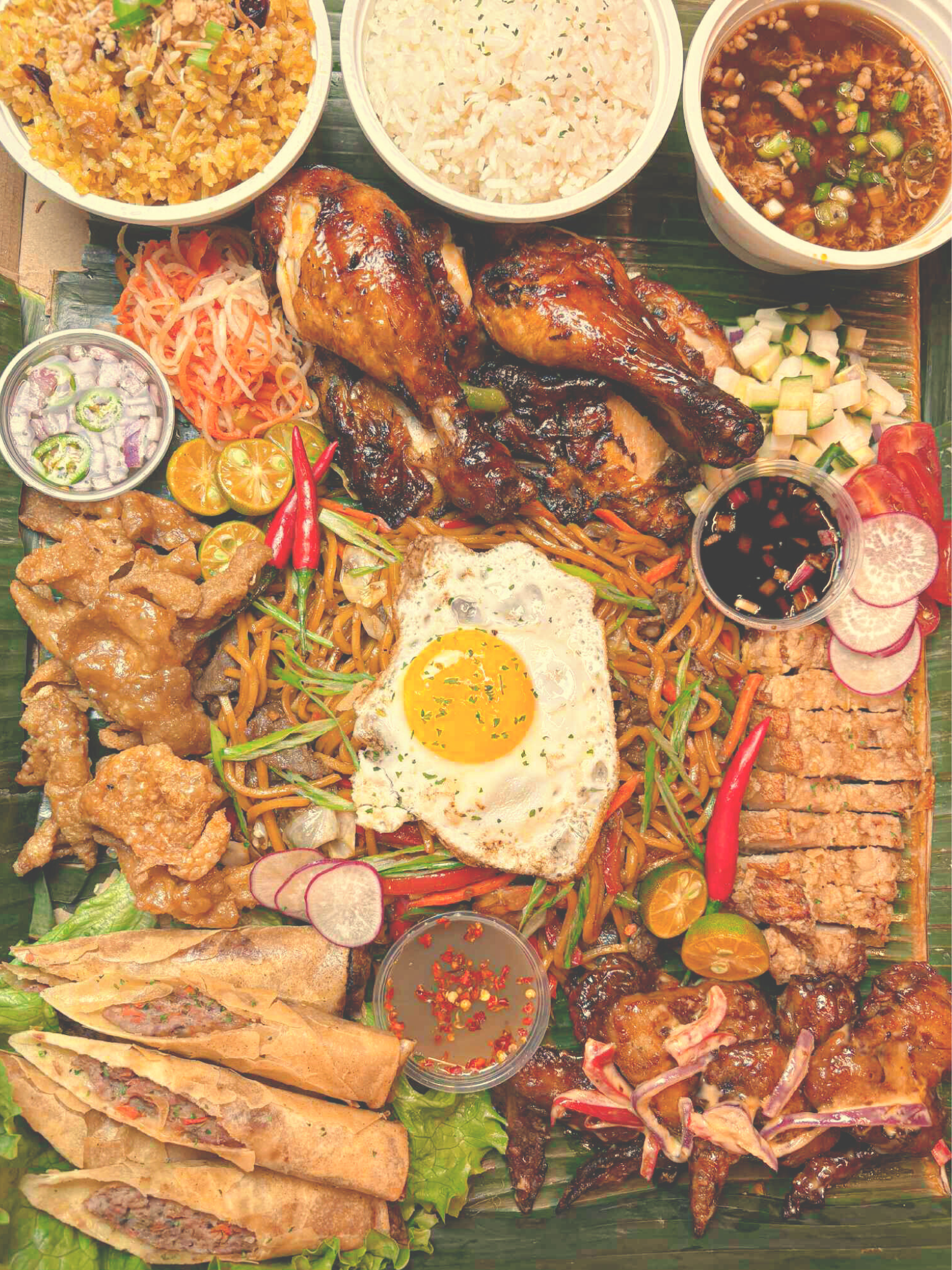
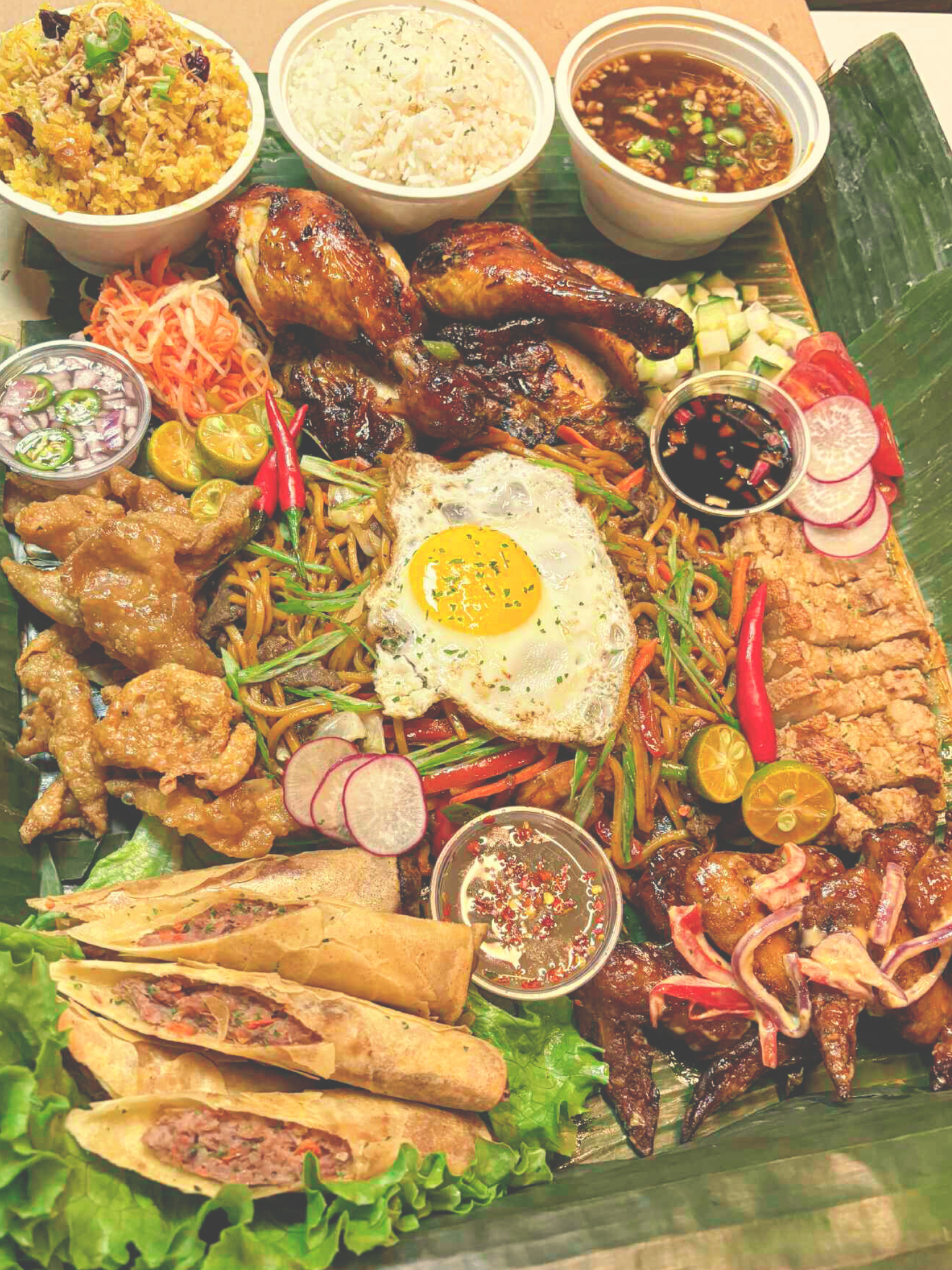
We created our Kamayan Feast Box to honor this tradition. Reimagined for today, and made to go.
Instead of a long table, it comes in a pizza box with banana leaves, it’s packed tight with comfort, flavour, and intention. But the spirit stays the same!
Inside the box:
2 Chicken Inasal – grilled lemon-grass chicken
1 Pancit Batil Patong - with crispy liempo, egg, and chicken skin, Pancit Batil Patong broth
4 Slamdunk Chicken Wings - sweet & sour tangy wings
1 Plain Rice - jasmine rice
4 Pork Lumpia - Filipino Pork Spring Rolls
This box is meant to be opened in the middle of the table.
Shared. Passed around. Eaten with hands if you want to do it right.
How to Eat It (The Kamayan Way)
There’s no wrong way but here’s the Filipino way:
Open the box fully
Pull it closer
Share everything
Eat together
Don’t rush
Whether you’re reliving childhood memories or experiencing kamayan for the first time, this feast is our invitation to slow down and eat like Filipinos do with heart.
Kamayan & the Boodle Fight
A Feast Meant to Be Shared
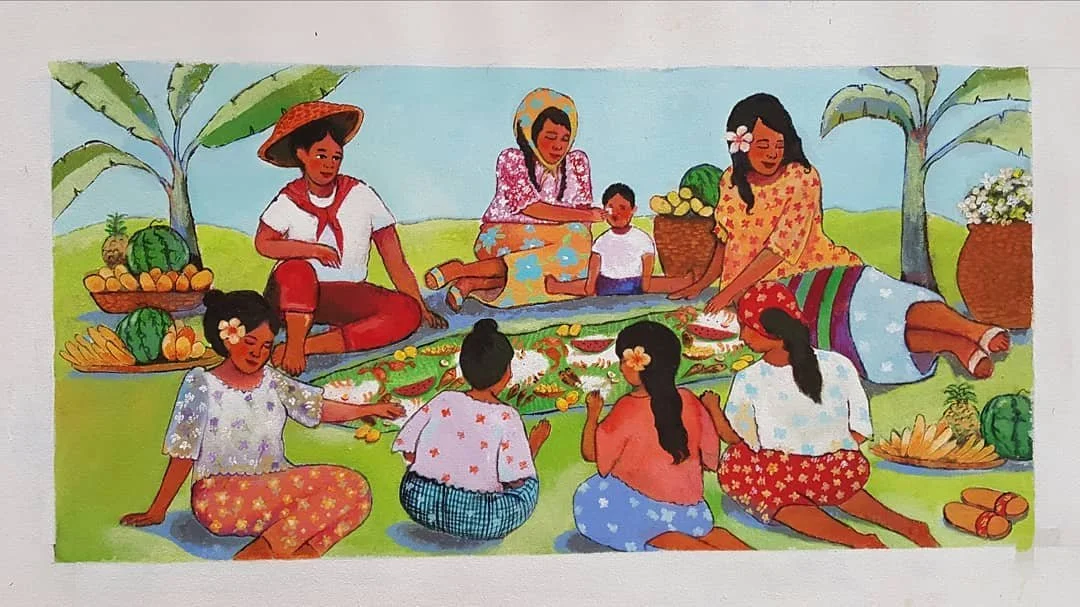
Kamayan comes from the Filipino word kamay, meaning hand. To eat kamayan is to eat with your hands. No forks, no barriers, just food, people, and connection.
Long before it became popular in restaurants, kamayan was practiced in Filipino homes and communities as a way to bring people together. It wasn’t about etiquette or presentation. It was about togetherness.

Where the Boodle Fight Came From
The modern boodle fight traces its roots to the Philippine military during the early 1900s. Soldiers would lay food down on long tables lined with banana leaves, sharing the same spread regardless of rank. Officers and soldiers ate side by side. No hierarchy, No privilege, just a communal meal where everyone was equal.
The term “boodle” was military slang for shared food, and “fight” referred to the lively, joyful scramble as everyone reached in at the same time. It wasn’t aggressive, it was playful, energetic, and full of life.
Over time, this style of eating moved beyond the military and into Filipino culture at large. Families, friends, and communities embraced it for celebrations, reunions, and moments worth remembering.