

Kare-kare is a Filipino stew made with oxtail, a rich, tender cut of beef that’s slowly cooked in a thick, mild peanut sauce. After hours of cooking, the meat becomes so tender it practically falls off the bone. In Vancouver, just as in the Philippines, the vegetables are served in that same sauce. Then the stew reaches your table with plenty of steamed rice and a small dish of fermented shrimp paste on the side.
Why Kare-Kare Matters in Vancouver
For many Filipino-Canadian families in Vancouver, kare-kare is a dish enjoyed when everyone gets together, with a big pot placed in the middle of the table for everyone to share. That makes it a natural fit for long meals where relatives and friends eat together and go back for seconds.
Interest in the stew has spread well beyond those family kitchens in Vancouver. Many diners from Kitsilano to Kerrisdale are now looking past adobo and lumpia to Filipino dishes they may not have tried before. Kare-kare often comes up in that search because its rich and nutty sauce feels so familiar, even if you’re new to the cuisine.
Modern Filipino cooking in the city tends to pair old family recipes with Canadian ingredients. A plate of kare-kare in Vancouver can reflect both the Philippines and the farms of British Columbia. That mix of memory and local produce is a big part of why the dish feels so at home here.
What Vancouver Diners Should Know First
Menus in Vancouver don’t always stick to oxtail, so you may find kare-kare made with tripe or beef shank listed beside the classic version. Each cut brings something different to the stew. Tripe stays soft but slightly chewy, while beef shank becomes tender enough to pull apart after hours of slow cooking.
Prices vary with the cut and the size of the portion, so two menus can list the same dish quite differently. Kare-kare is also often served in large portions meant for sharing, so one order can be placed in the middle of the table for everyone to enjoy.
The sauce gets its body from toasted ground rice. It thickens the peanut base and adds a faint roasted note. The orange colour comes from annatto, the red seeds of the achiote tree, and cooks steep them in oil or water to tint food without adding much flavour.
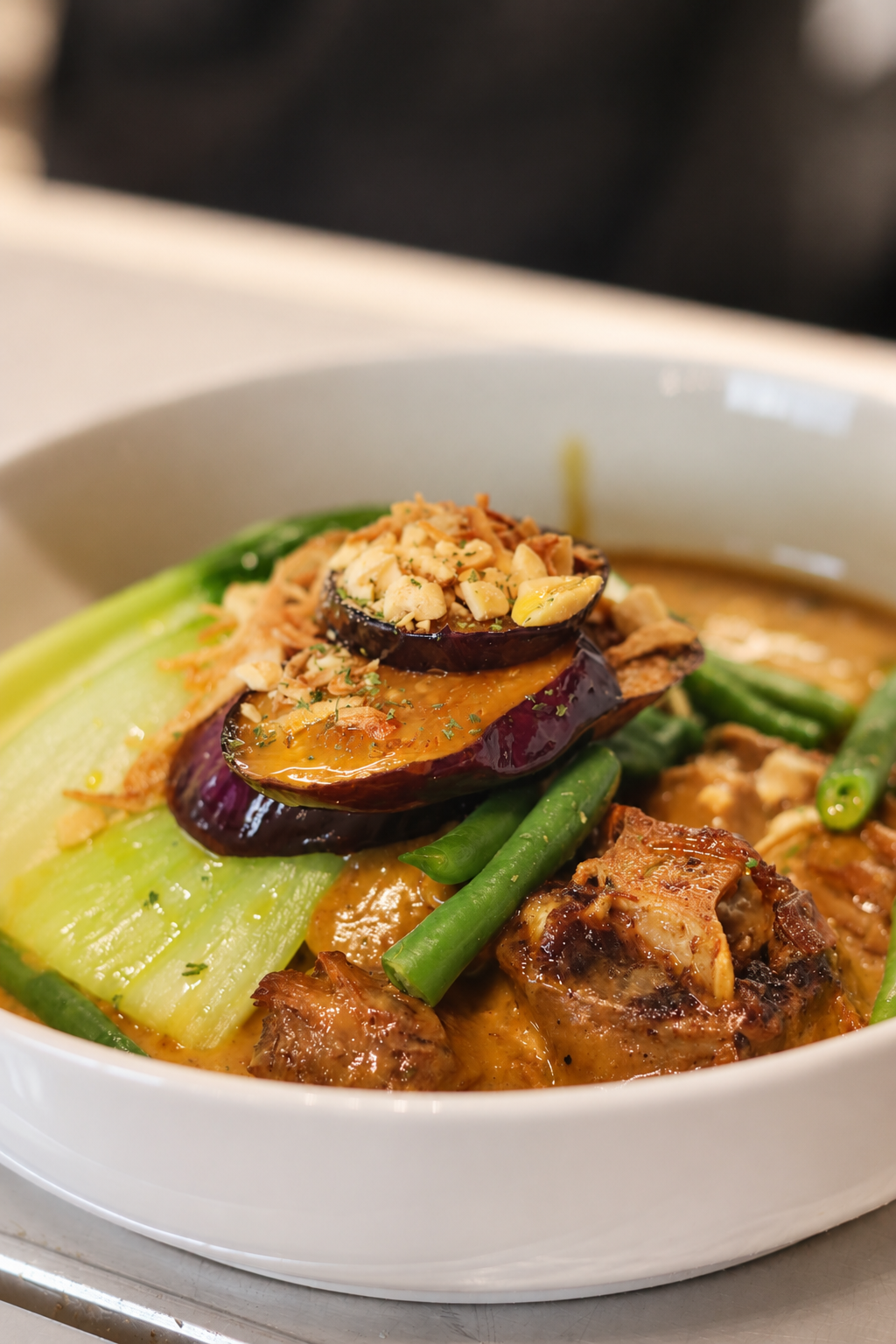
Kare-kare in Vancouver: oxtail and vegetables in thick peanut sauce with bagoong and steamed rice on the side
How to Use the Bagoong on the Side
Bagoong is a fermented shrimp paste, and with kare-kare it usually comes in a small dish on the side instead of being stirred into the pot. The peanut sauce is intentionally mild, so the stew can taste a little bland on its own. Adding bagoong gives it the saltiness and rich, savoury flavour that brings the whole dish together.
We find it’s best to add a little bagoong at a time, putting a small amount on each spoonful rather than adding a big scoop to the whole plate. That way you can taste how strong it is and adjust as you eat, because a little bagoong goes a long way.
Steamed rice goes perfectly with kare-kare, helping balance the rich peanut sauce and the strong, salty flavour of the bagoong. If you want a good habit to start with, spoon the stew over a bed of rice and finish each bite with a light touch of bagoong.
When Vancouver Craves a Slow, Rich Stew
Kare-kare tends to show up on Vancouver tables during the wet, grey winter months. When the days get shorter and the rain keeps coming, a warm, hearty stew is a welcome choice for dinner. On a cold, damp evening, that warm peanut sauce and tender oxtail hit the spot far better than anything light or quick.
Many families save the dish for Noche Buena, the late-night Christmas Eve feast where the whole household sits down together after evening mass. Birthdays and family reunions call for it too, because one large pot can feed a crowd and often leaves enough for the next day.
Trying Kare-Kare for the First Time
For your first plate, we’d suggest ordering kare-kare with steamed rice. It’s best shared across the table, so everyone gets to taste the stew and the vegetables together. Eating it this way also shows you how each person likes to balance the sauce with the bagoong.
Before ordering, ask how the restaurant makes its peanut sauce and what cuts of meat it uses. Every family has its own way of making kare-kare, so recipes can vary quite a bit. Whatever they tell you will give you a good sense of how rich and how tender your bowl is likely to be.
If you’re making kare-kare at home, give yourself plenty of time. Oxtail needs to simmer slowly for several hours until the meat is tender enough to fall off the bone. A slow cooker lets the stew tick along while you work, and a pressure cooker cuts that time down for a weeknight meal.
Answers to Common Questions About Kare-Kare
-
Kare-kare is mild, and its peanut sauce tastes rich and slightly sweet rather than hot. Most of the sharp flavour comes from the salty bagoong on the side, although some cooks set out fresh chilies if you want a bit of heat.
-
Kare-kare isn’t safe for anyone with a peanut allergy, because the sauce is built on ground peanuts or peanut butter. Even a version made without peanuts may share pots and utensils with the regular dish, so the risk of cross-contact stays high. The bagoong that comes alongside is made from shrimp, so this matters if you or someone at your table has a shellfish allergy.
-
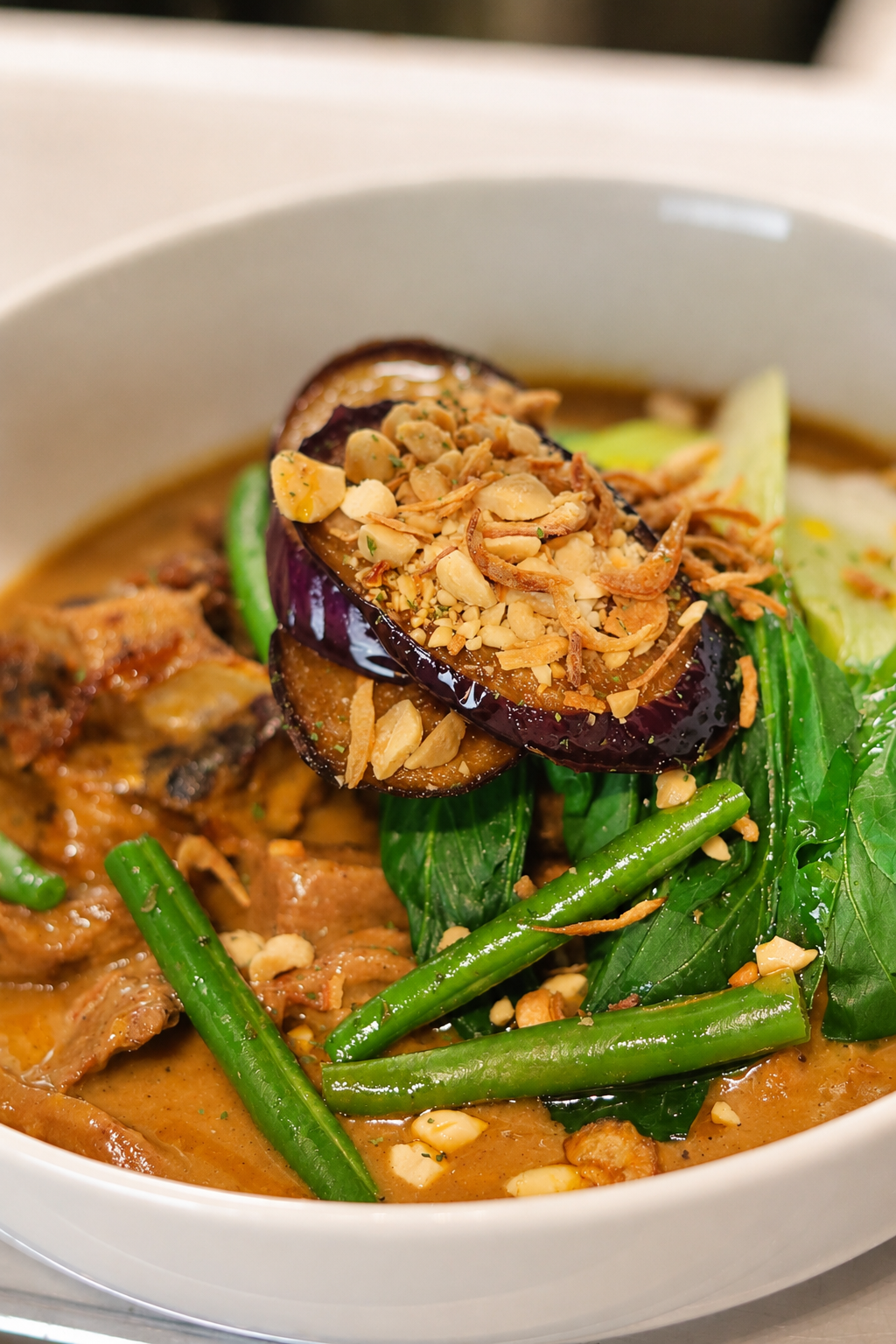
Kare-kare usually includes long beans, eggplant, bok choy and banana blossom. As they cook, the vegetables become tender and soak up the rich flavour of the peanut sauce. Many cooks blanch them separately and add them near the end, so they keep their colour and a little bite.
-
Kare-kare uses neither curry paste nor coconut milk, so its sauce tastes of roasted peanuts and slow-cooked beef rather than chili and aromatic spices. Thai peanut curries often get their flavour from fish sauce and curry paste, while kare-kare has a milder taste until you add bagoong at the table. Kare-kare also uses toasted ground rice to thicken the peanut sauce, giving it a rich, nutty texture that’s different from coconut-based curries.
-
At HALINÁ Modern Filipino Kitchen + Bar on East Hastings Street, kare-kare is one of the Filipino classics on our menu, made with charred oxtail, slow-cooked beef and honeycomb tripe and served with eggplant, beans, bok choy, shrimp paste and rice.